
Alum, Copper Sulphate & Chlorine: what each one actually does in your pool
Three different chemicals, three completely different jobs. Here's what each one does, how it works, and why getting the dose right is a bigger deal than it looks.
Alum (Aluminium Sulphate)
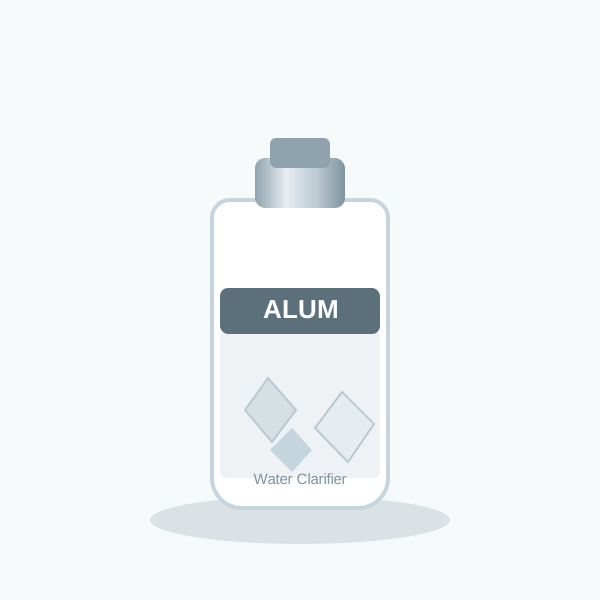
Alum is what we reach for when a pool looks persistently hazy or cloudy, even though chlorine and pH are already balanced. It's a coagulant, not a sanitizer - its job is to clear the water, not disinfect it.
How it works: the fine, negatively-charged particles that make water look hazy - dust, pollen, fine organic debris - are too small for a filter to catch on their own. Alum's aluminium ions bind to these particles and pull them together into larger, heavier clumps called floc. That floc either sinks to the pool floor for vacuuming, or gets caught properly by the filter media, and the cloudiness clears with it.
When it's used: after heavy bather load, a storm, or reopening a pool that's been closed for a while - any time the haze doesn't clear on its own after a day or two of normal filtration.
Copper Sulphate

Copper Sulphate is an algaecide - it's what we bring in when chlorine alone isn't keeping algae under control, especially on pools that have had a stretch of low chlorine or heavy shade.
How it works: Copper Sulphate releases copper ions into the water. These ions interfere with the internal processes algae cells need to grow and photosynthesise, which stops new algae blooms from taking hold and kills off existing green, black or mustard algae.
When it's used: recurring algae growth, a greenish tint to the water, or slippery walls and floor - particularly after chlorine has been allowed to run low.
Chlorine

Chlorine is the primary sanitizer in almost every pool - the chemical actually responsible for keeping the water safe to swim in, not just clear.
How it works: chlorine dissolves into pool water as hypochlorous acid, a compound that attacks the cell walls of bacteria, viruses and other pathogens and neutralises them before they can make swimmers sick. It also breaks down organic contaminants - sweat, sunscreen, body oils - that build up in the water with every swim.
Forms we work with: slow-dissolving tablets for floaters and feeders, fast-dissolving granules for shock-dosing after heavy use, and liquid chlorine for larger commercial systems - each suited to a different maintenance rhythm.
Chemical FAQs
No - never mix pool chemicals directly with each other or add them at the same time. Each is dosed separately, at different points in the treatment process, following label guidance and your pool's specific chemistry.
Cloudiness is usually a filtration or fine-particle problem, not a sanitizer problem. Chlorine kills what's living in the water, but clearing suspended particles is specifically what Alum treats.
It needs to be dosed carefully in these systems, since copper can react differently around a salt chlorinator. Check with us before adding it if your pool runs on salt.
It depends on bather load, weather and pool type, which is why we test on every AMC visit rather than work off a fixed schedule.
Not sure what your pool actually needs?
We test your water on site and dose exactly what it calls for - nothing guessed, nothing wasted.